
Meet Four of the Farmers Behind Our Eggs
Updated: 3 days ago
Four Wisconsin families, three days, and the one guy who brought ROC™ to Cashton, Wisconsin.

At Wild Oats we sell eggs. And it takes a lot of work to bring our carton of Regenerative Organic Certified® eggs to the shelf. Certified organic is only the baseline for ROC, which stacks three more demands on top of it.
The farming practice must add organic matter to the soil, not deplete it.
The animals must be free to act as animals, never caged, never dosed with hormones.
The people doing the work have to be paid fairly & treated well.
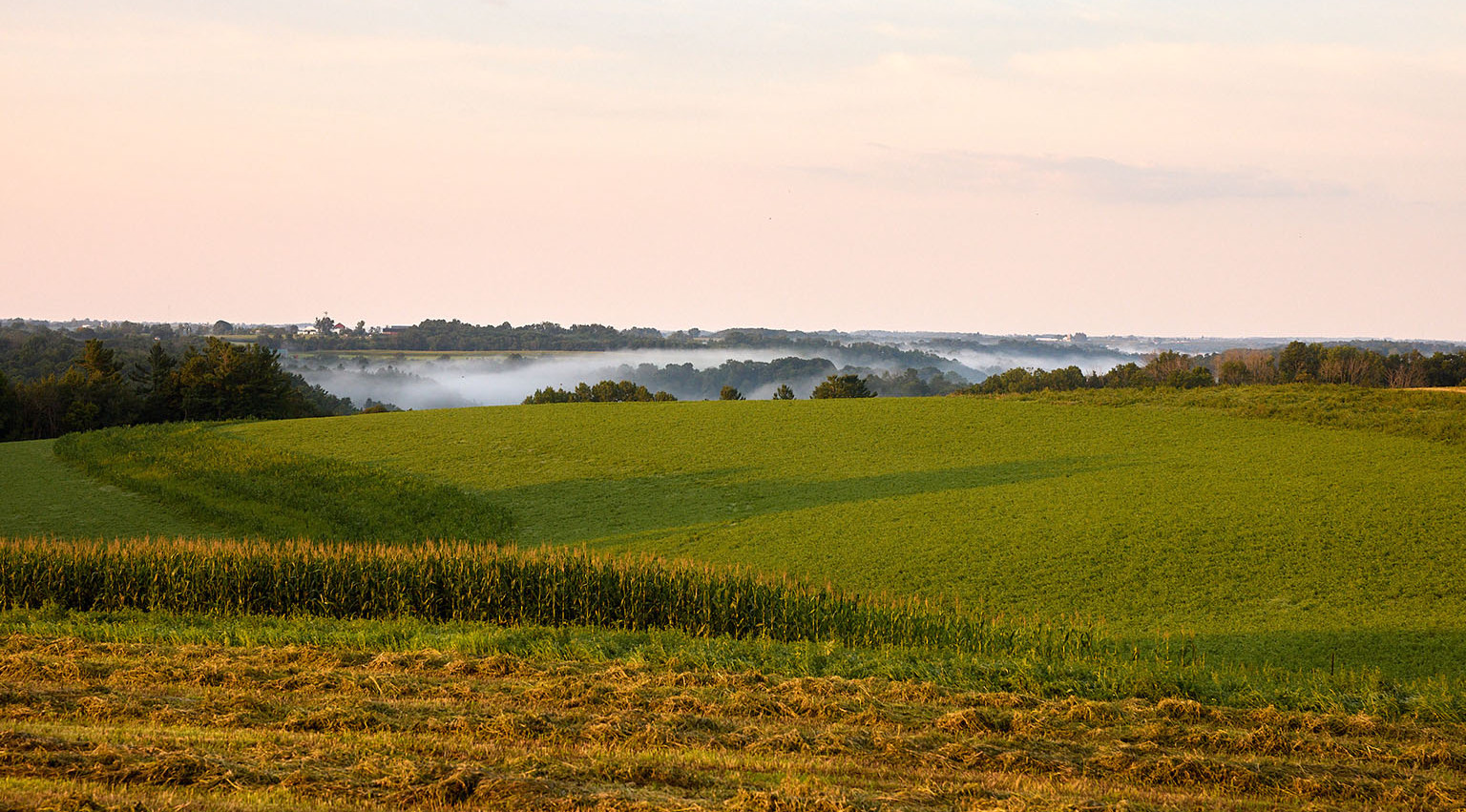
In August, our film production team stuffed their gear and themselves into a minivan and drove to the Driftless region of southwest Wisconsin. We wanted to meet the families and see the farms doing the work to provide us with the best possible egg in the whole proverbial hen house.
Ernie, the catalyst
An overly humble powerhouse of a human, Ernie Peterson runs Cashton Farm Supply in Cashton, Wisconsin. Here is how he described his own role, on camera, unprompted: "I'm just a small spoke. It's everybody else who does all the work around me."
As humble and charming as that is, it’s also not accurate. Here is the actual story. He bought the feed mill in 1984. In 1987 he started making feed for Organic Valley back when Organic Valley was brand new. In 1996 he took the entire operation organic, and no conventional grain or drugs have moved through those mills since. Then, about fourteen years ago, watching the dairy farms around him disappear one by one, he put up the first large egg layer barn in the area.


His reason has not changed since:
"The goal at that time was that we could just find something else for these guys to make an income at home. My idea was, if we could find a dozen barns, to have a dozen people where one person could stay home with the kids versus having to go to town. We've accomplished something for a community. And that was the goal when we started."
There are thirty or forty of those barns now. When the eggs outgrew what anyone nearby could handle, CFS bought a processing plant in Westby rather than keep trucking eggs to Indiana and Missouri to get them packed. Forty people work in that plant today.
Bankers have told him more than once that he should skip the farmers and build the barns himself. He keeps saying no. "That's not our goal, to make that money. Let's get the money on the farm, keep people on the farm. Find a way that we can let a family live on the farm, and then we'll live in between."
hemmy acres, a farm of families
John Hemmersbach milked cows for more than forty years. The family moved onto their current farm in 1968. In July of 1999 the barn burned, and in the rebuild that followed he made another decision, fast, the way he tends to: "I told my wife one morning, I said I think we're going to go organic." He had already bought conventional seed for the year. He called the company and swapped it out. He has never looked back.

They sold the dairy herd in 2016 with no debt on the books and wondered what they wanted to do next. Selling was an option. Ernie chimed in and said that chickens were another option.
Then Ernie started nudging, and kept nudging, and finally settled it without asking.
John was up at Cashton Farm Supply one day when a young man working there
waved him over to a computer. John looked over his shoulder at the screen. "He goes, 'We got birds coming for you in the fall.' I'm like, what? He goes, 'Yeah, we got birds coming for you in the fall.' And I stood there, I said, 'I guess we're building.'"
Now they run twenty thousand birds in a 500 foot barn with an aviary system down the center and fifty-one acres of pasture outside. Shelby, John's daughter-in-law, left teaching to manage the barn and handle the certifications. Every other Wednesday she and her husband Matt weigh forty birds and call it date night. The family has been known to drag lawn chairs into the yard and sit there watching the chickens, for fun.

John's daughter Jill has the best description of the whole operation: "It's a farm of families."
Ask John what the barn is actually for and he does not talk about margin at all. "That barn over there wasn't built for Karen and I. It was built for [the kids and grandkids]. It excites me, and it makes me passionate to know that my grandkids could end up owning this farm."
chip and his fertilizer factory
John Chapiewsky, aka "Chip," is the fifth generation on his farm, and one of the first ROC barns in Ernie's wild regenerative scheme. “My great great grandpa came here in 1902, and he built a lot of the buildings. Some of them are still here today."

He knew as a kid he wanted to farm, and he also knew he and his dad had different ways of doing things, so after high school he went and built his own business instead. Custom manure hauling and forage harvesting, seventeen years, up to ten employees. The cost to himself was exactly what you would guess. "I was gone a lot. I'd leave in the dark, come home in the dark. Everybody was sleeping when I left, everybody sleeping when I come home. I had a hard time telling people no."
He bought the farm from his father in pieces, the last of it in the fall of 2020, on terms he insisted on. "I didn't get no family discount or anything, and I didn't want one."
The pasture his ROC eggs depend on exists because of a decision he made at six in the morning on the day they broke ground. The barn was staked out down by the road. Chip walked his excavator operator up to a different spot on the hill and wondered about putting it there instead, for the ventilation and the room to grow. That move is the only reason the pasture certification was ever possible. "It was all dumb luck, really, because I wasn't really planning on being a pasture certified barn. But after doing that and then learning later about the ROC and pasture birds, it was really a no-brainer."

He now describes his chicken barn as "a very good fertilizer factory. I don't buy any off-farm fertilizer by any means. Everything we do here is sustainable. It's kind of like a full circle."
We asked whether he was happy with how it all shook out. "There was a lot of people that told me I'd never make it doing custom work, and there was people that never thought I'd get the farm or make it on the farm. The world is full of people that just work a job for a paycheck. I've never really had a job, and I don't think I'd be much good at it."

home farm, saved twice by eggs
Bryce Griffin's day job was helping other farmers with pasture compliance. His wife Katie is a math teacher and the youngest of thirteen grandchildren in a family that had been on the same ground in Coon Valley for somewhere between six and eight generations, since they came over from Norway.

Grandma was going to have to leave the farm soon, and once she did it would be sold to somebody outside the family. Bryce had the idea that a chicken barn could make the numbers work.
Enter Ernie. He told them that a barn ten minutes from their house had come up for rent, and a flock needed a home. So they made a move. Twenty-two days later there were birds in it. About a month after that, Grandma moved off the farm and the family got ready to sell. That first flock is the only reason they could afford the family farm, and invest in a second flock.
Katie brought the news in person. "I went to her assisted living and brought her some Culver's ice cream, her favorite, chocolate. And I said, 'Grandma, we're getting the farm.' And she just said, 'Woohoo!'" Katie’s grandpa had died some years before. "My grandpa up in heaven, I can swear he would be saying, 'Well, I'll be damned,' because that was his favorite thing to say."

Then they found out this was not the first time eggs saved this farm. Katie's great-grandpa Julian kept a daily ledger from 1935 to 1965, every single thing he bought and sold, and the family knew by word of mouth what it recorded. "During the Great Depression, we found out that they actually were able to save the farm because they were selling eggs to the people in Coon Valley."
The place had not been a working farm since the early 1990s. Ninety years after Julian, eggs bought it back. Katie says it plainly: "If it wasn't for the chickens, we probably wouldn't be able to be here. It's literally saving our family farm."
One more thing worth knowing. Bryce is an only child, and his dad wanted to farm his whole life but it never was an option for him. Bryce hired him. He is there five and six days a week now. "It's almost a reverse of the generational thing."
Chad, the destroyer of cages
Chad Wirts is the sixth generation on his land. The earliest record his family has is a newspaper article referring to the farm in 1856.
His grandparents ran a commercial white egg facility on this same land, working with Ernie back in the seventies and eighties. Chad grew up around it. Thirty years later he built his own barn, twenty thousand layers, regenerative organic certified, pastured brown eggs. The timing was almost too neat: "The summer that we built our barn for this facility, the old barn that my grandparents used to own, that they had their egg facility, got torn down. So that barn got torn down the very summer that mine got built."
Same ground, same headcount, no cages.

The eggs paid for the rest of it. "The egg production gave us the cash flow needed to make everything work. It allowed me to bring one of my sons into the farm. It's what he wanted to do." That son is Ty, who farms full time and does custom work on the side. Chad put cover crops on his grain acres, converted the beef herd to grass fed behind a bull with New Zealand genetics, and added a small flock of sheep and three pasture pigs mostly to see what happens.
His whole philosophy fits in two sentences. "What's happening below the ground is way more important than what's happening above. Any healthy plant begins with the soil."
what we took away from the trip
We showed up thinking about sustainability, transparency, supply chain integrity. Three days later we drove home with some additions to our list: Kids being nearby. Land staying in the family. A spouse getting to quit a job in town. The environmental case for regenerative farming is real and it is serious, and out here it arrives as a side effect of people trying to keep a family together on a piece of ground.

Then there is the math, which is the part few talk about. Bryce laid it out for us:
"Some of our rules with pasture require all of the pasture land for the birds to be within 400 yards of the building. And that rule basically means that there's no way for a big company to make a pasture-raised egg and follow the rules. You can't put more than 40,000 birds, maybe 50,000 birds in one place and follow this rule. There are cage complexes that have 6 million birds. So when we talk about 40,000, in this day and age, with today's technology, that's a family operation that we can run."
Nobody has to take our word that these farms stay small. The rules handle it.
It's worth the extra $2 a week
That fight is not new, and John Hemmersbach has been in it longer than we have. "I was an advocate back in the early 90s. I was part of the protest in Madison back in 1990 to keep the small farms. We had approximately 32,000 dairy farms in 1990." Most of them are gone, and the ones still standing got very large. He is still at it, except now the protest is a barn with twenty thousand birds on pasture and his grandchildren running around it.

Which brings us to you. Big Food has spent decades framing the food system as your personal moral failing, as though the cages were your idea. They were not. You did not build any of this. Ernie, who has watched this math play out for forty years, puts the ask about as plainly as it can be put:
"If eggs cost you an extra two bucks a dozen, you're maybe using a dozen, a half a dozen a week. So you're going to spend two bucks for a premium type egg that you know what's in it. And you supported somebody."
John asked us to print this, so here it is. "I want to thank the consumer for their understanding, because without the consumer buying our organic eggs now, we don't exist."


Comments